
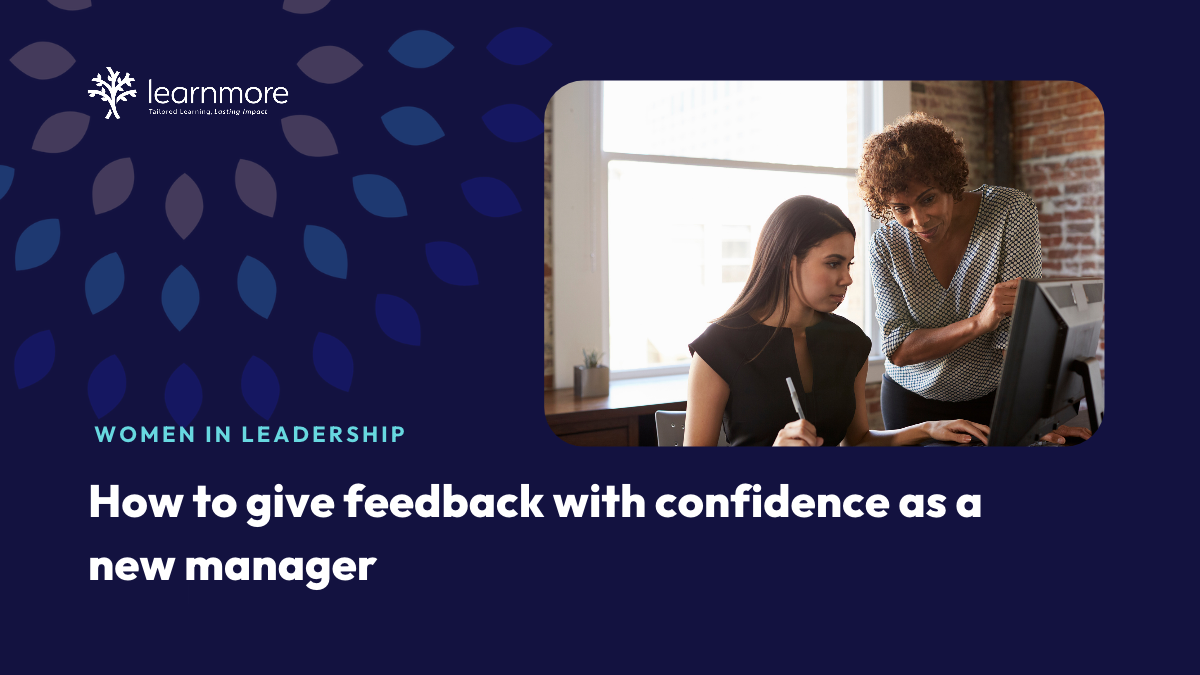
Few parts of a first management role cause more quiet dread than giving feedback. Praise feels awkward to deliver without sounding hollow, and anything critical carries the fear of damaging a relationship, especially when the person across the table was your peer six months ago.
If that sounds familiar, you are in good company. 82% of people entering management roles have had no formal management or leadership training, which means most new managers learn feedback the hard way, through conversations that went badly. It does not have to be that way. Feedback is a skill with a structure, and once you have the structure, the confidence follows.
Why feedback feels so hard
Most of the fear comes from what we imagine feedback to be, a judgement of the person. Reframe it as information about the work and its impact, offered so someone can succeed, and the conversation changes. You are not telling someone they are falling short as a human being. You are telling them something they need to know to do well, which is one of the most useful things a manager can do.
There is a cost to avoiding it too. Problems that are not named do not disappear, they grow, and the eventual conversation is harder than the early one would have been. Your strongest people also notice when poor performance goes unaddressed, and it quietly erodes their trust in you.
A structure that works
When you need to raise something, three steps keep the conversation clear and fair.
Describe the situation. Be specific about when and where. In Tuesday’s client meeting, rather than lately or sometimes, which invite argument about the generalisation instead of a conversation about the event.
Describe the behaviour. Stick to what you observed, not what you assume it means. You interrupted the client twice while she was explaining the issue, rather than you were not listening. Observations can be discussed. Accusations get defended.
Describe the impact. Explain the effect, on the client, the team, the work or you. She stopped sharing detail we needed. Impact is what makes the feedback matter, and it is the part people remember.
Then stop talking and listen. There may be context you do not have, and the conversation should be exactly that, a conversation. Agree together what happens next, and make a point of noticing when it does.
Make praise specific too
The same structure makes positive feedback land properly. Great job is pleasant and forgettable. The way you handled that pricing question kept the whole room on side is feedback someone can repeat. Specific praise tells people what to do more of, and it builds the trust that makes harder conversations possible later.
Confidence comes from practice, with support
No article makes the first difficult conversation easy. What makes it easier is practising the skill somewhere safe, with someone experienced to guide you, which is exactly how The Management Launchpad works. Our ILM assured programme for aspiring and new managers runs over four months, delivered remotely nationwide, and every learner has a dedicated coach to work through real situations like these, including the ones happening in your team right now.
The results speak in our learners’ own words. 98% of our learners say they feel more confident in their role, and 75% are promoted or take on greater responsibility after completing their qualification.
Feedback is not a personality trait some managers are born with. It is a skill, and you can learn it. Explore The Management Launchpad, or get in touch for a chat about whether it is the right fit for where you are.
*Our articles are accurate at the time of publication, but course details, funding and industry standards can change. They’re here to inform rather than to replace formal advice, so if you’re weighing up a decision, get in touch and we’ll help you find the right path.

ILM Assured: Women in Leadership – Leading with Strategic Impact
- Senior women leaders
- £1,950 + VAT
- 9 months
- ILM assured certificate

ILM Assured: Women in Leadership – Bridge to Boardroom
- Mid-management women leaders
- £1,650 + VAT
- 6 months
- ILM assured certificate

ILM Assured: Women in Leadership – The Management Launchpad
- Aspiring women leaders
- £1,250 + VAT
- 4 months
- ILM assured certificate