Most organisations know that hiring the right people matters. But what about developing the people you already have? Understanding how your team thinks, communicates, and responds to pressure is just as important as finding the right candidate. That’s where psychometric assessments come in.
Psychometric assessments aren’t just recruitment tools. They’re powerful instruments for ongoing employee development, helping managers and HR leaders make better decisions about training, team-building, and career progression. According to CIPD, more than 75 per cent of The Times Best Companies to Work For and 80 per cent of Fortune 500 firms use psychometrics in some capacity. And while those numbers speak to recruitment, the real value often shows up after someone has been hired.
What psychometric assessments actually measure
Psychometric assessments fall into two broad categories. Aptitude tests measure cognitive abilities like numerical reasoning and problem-solving. Behavioural and personality assessments look at how someone naturally operates, including their communication style, emotional intelligence, and motivations.
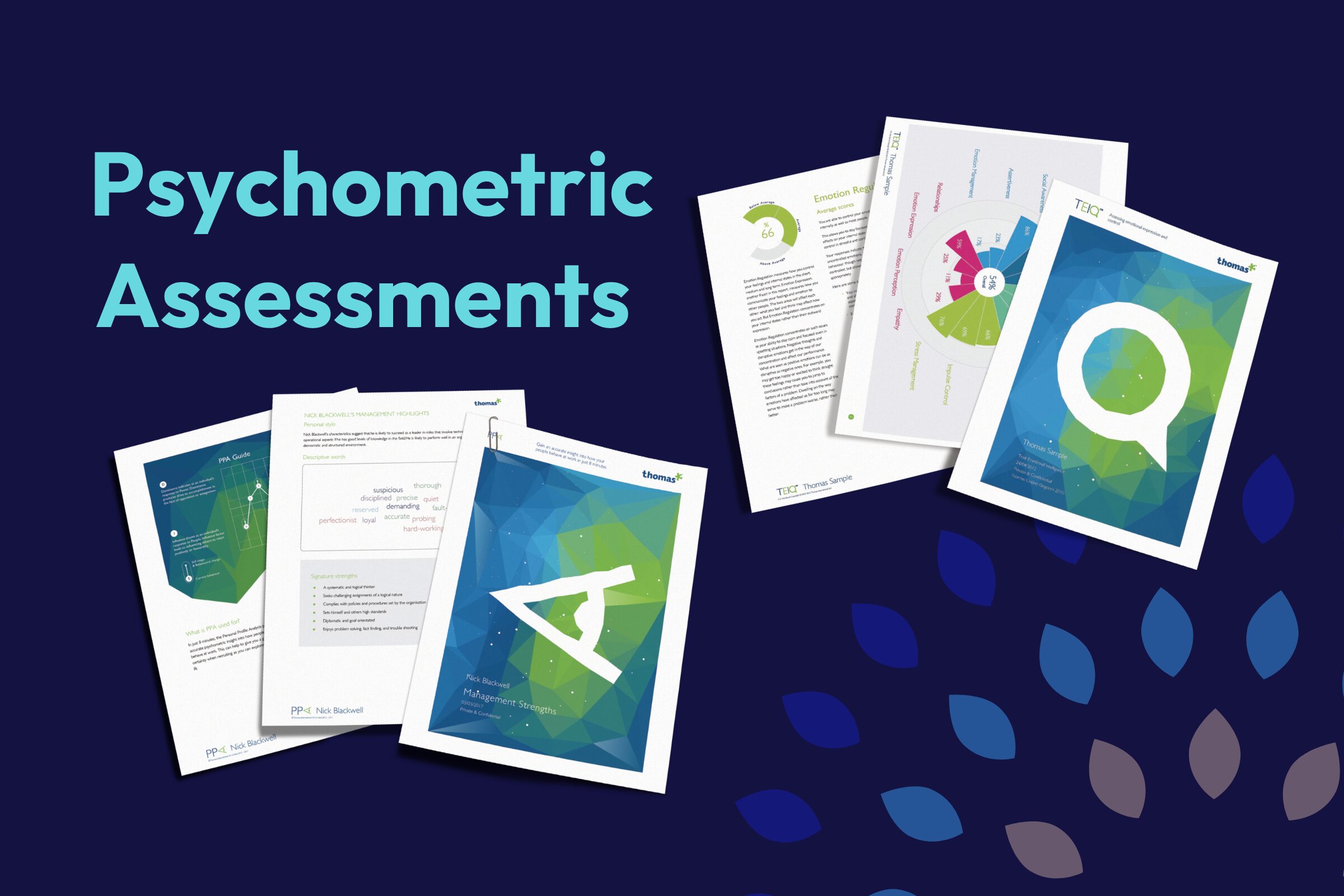
For employee development, behavioural and emotional intelligence assessments are most useful. Tools like the Thomas International Personal Profile Analysis (PPA), based on the DISC model, and the Trait Emotional Intelligence Questionnaire (TEIQue) give managers a science-backed picture of how their people work. Both are registered with the British Psychological Society, meaning they meet rigorous standards for reliability.
Why psychometric assessments matter for development
They reveal what a CV never will
A CV tells you where someone has worked and what qualifications they hold. It doesn’t tell you how they handle conflict or what motivates them. Psychometric assessments fill that gap with objective, measurable data about the traits that shape how someone performs every day.
They help you build targeted development plans
Generic training programmes often miss the mark because they treat everyone the same. When you understand a person’s behavioural profile, you can design development that addresses their specific strengths and areas for growth. Someone who scores high on Dominance in a DISC assessment might benefit from coaching on collaborative leadership, while someone with high Steadiness might need support in managing change.
They improve team dynamics
Understanding how different behavioural styles interact is one of the most practical applications of psychometric data. When team members understand each other’s communication preferences, collaboration improves, and conflict becomes easier to manage. Research from the Aberdeen Group found that companies using pre-hire assessments reported a 36 per cent higher rate of new hire satisfaction (myculture.ai, 2025), and those insights continue to add value long after onboarding.
They support fairer, more objective decisions
When it comes to promotions, restructures, or succession planning, psychometric data helps reduce unconscious bias. Because the assessments are standardised and objective, they give you consistent, evidence-based information about someone’s potential. That means decisions are grounded in data rather than gut feeling or office politics.
They boost engagement and retention
People who feel understood and invested in are more likely to stay. When you use psychometric insights to tailor development, you’re showing people you see their potential. On average, a ‘bad hire’ costs companies 30 per cent of each hire’s annual salary (TalentLens, 2025). Psychometric insight helps you avoid that cost by getting people into the right roles with the right support.
How to get the most from psychometric assessments
Psychometric data is only as useful as the action you take from it. A report sitting in a drawer helps nobody. The real value comes when results are discussed, understood, and used to shape real conversations about development.
That’s why coaching matters. A good coaching session helps someone make sense of their results, understand what the data means for their role, and create a practical action plan. Without that conversation, even the best assessment is just information on a page.
It’s also worth thinking about psychometric assessments as part of a broader development strategy, not a one-off exercise. When you combine behavioural profiling with emotional intelligence assessment, you get a richer picture of someone’s strengths and development needs. Revisit those insights regularly to track progress over time.
What Learnmore offers
At Learnmore, we offer two psychometric assessments designed for workplace development:
- Our Behaviour Profiling (PPA) uses Thomas International’s Personal Profile Analysis to measure four behavioural styles, giving you insight into what motivates someone and how they prefer to communicate.
- Our Emotional Intelligence (TEIQue) assessment measures 15 facets of trait emotional intelligence, covering well-being, self-control, emotionality, and sociability.
Both are registered with the British Psychological Society. And you’re not just getting a report. Each includes a personalised coaching session, so your people walk away with a plan they can actually use.
Whether you’re looking to develop individual team members, improve team dynamics, or support leadership development, psychometric assessments give you the insight to make better decisions. Explore our psychometric assessments or get in touch to learn more.
Speak to us to discuss your options
*Our articles are accurate at the time of publication, but course details, funding and industry standards can change. They’re here to inform rather than to replace formal advice, so if you’re weighing up a decision, get in touch and we’ll help you find the right path.